
Living with aligners · 5 min read
Do clear aligners hurt? What “tightness” actually feels like
Not painful, but you'll feel them working. What the tightness of a new set really feels like, how long it lasts, and what's worth mentioning.
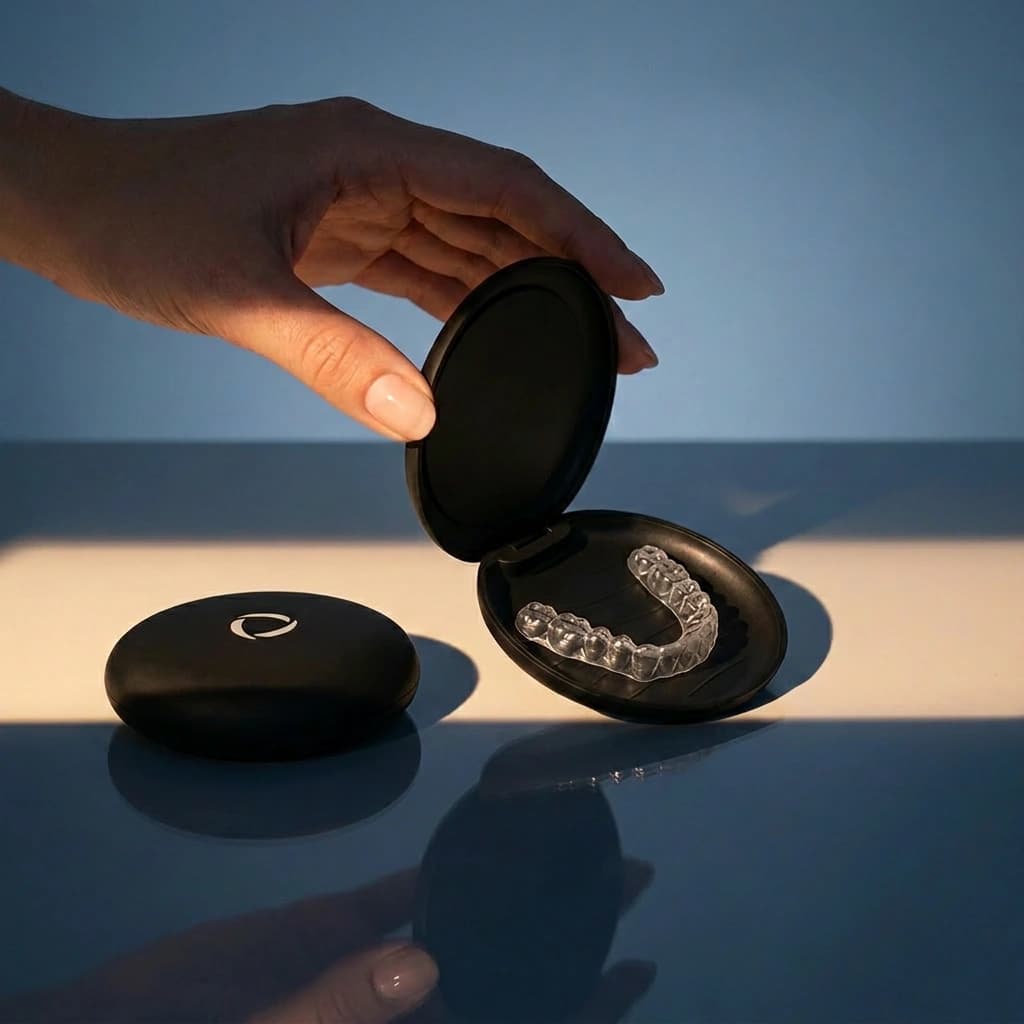
It is a fair thing to want to know before you commit to months of treatment. The honest answer is that clear aligners are not generally painful — but you will feel them working, and understanding that feeling in advance means it won't take you by surprise.
Pressure, not pain
Each set of aligners in your series is shaped very slightly differently from your teeth as they sit today. That small, deliberate difference is what encourages the teeth to move. When you first fit a new set, you'll usually notice a sense of pressure or tightness — most people describe it as a firm awareness around the teeth rather than anything sharp. It tends to be most noticeable in the first day, eases over the second, and has usually settled by the third as the teeth begin to move into the new shape.
This gentle, continuous pressure is exactly how the treatment is designed to work. Orthodontic movement relies on light, sustained force rather than sudden effort, which is part of why aligners are generally more comfortable than many people expect.
Making the first days easier
A few simple habits smooth the adjustment. Changing to a new set in the evening means you sleep through the phase when it's most noticeable and wake with it already easing. Gentle chewing helps the aligners seat fully against the teeth — some people find soft chewing on a clean object for a minute or two after fitting a new set helps them settle. Drinking water and simply getting on with your day both encourage the teeth to adjust. If you need it, ordinary over-the-counter pain relief is usually more than enough for the first evening, though it's worth mentioning any medication to your dentist. And if an edge ever feels rough against the cheek or tongue, it can be gently smoothed — you don't have to simply tolerate it.
What's normal, and what to mention
It helps to know the difference between the expected and the unexpected. A general tightness with each new set, a mild ache when biting for a day or so, and a passing tenderness are all part of the normal picture. Sharp or lasting pain, a single tooth that becomes very sore rather than merely tight, an ulcer that won't settle, or an aligner that is cutting into the gum are not — and they are worth raising rather than pushing through.
Because your treatment is overseen in person, these things are quick to look at and simple to put right. A rough edge can be adjusted, a fit checked, a plan paused if needed. That is rather the point of being seen: nothing has to be endured or guessed at from a distance.
The bigger picture
For most people, the discomfort of clear aligners is brief, mild and — in an odd way — reassuring, because it's the feeling of the treatment doing precisely what it's meant to. It arrives with each new set, fades within days, and by the end of a fortnight has usually stopped registering at all. Set against the result, it asks very little.
Wondering if aligners are right for you?
See how Velare works →